

User Research: Surveys, Competitive Analysis
Role
Branding
Illustration
Creative Direction
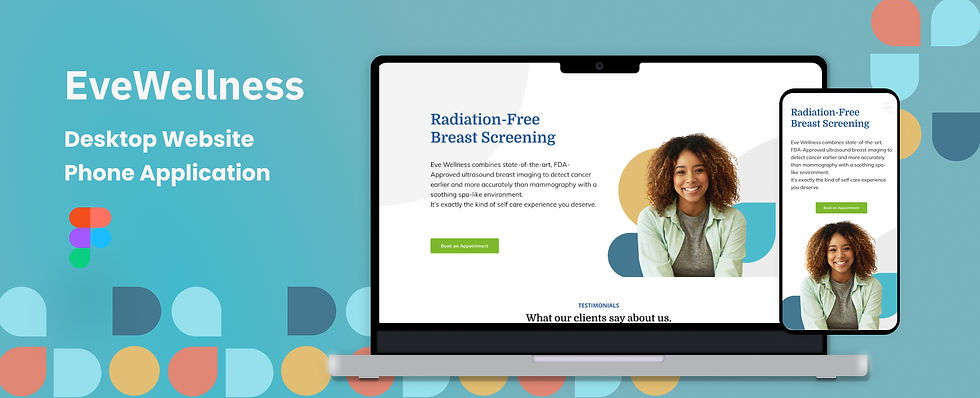
Redesign Website
Project Management
Optimization SEO Strategies
Prototype
Desktop and Mobile application
Cotribute
Year
August 20222
Google analysis Figma Photoshop Illustrator
Tools Used
E Wellness 01
Overview
Helped launch a clinic by designing and extending the website to reflect the integration of technology and wellness, leading to a 30% increase in user engagement and a 25% boost in conversion rates. Managed concept development, visual theme creation, site architecture, full optimization, and PPC campaign alignment, ensuring the design adhered to the brand guidelines throughout. The design seamlessly supported ongoing marketing efforts by enhancing user experience through targeted ad creatives, optimized landing pages, and strategic SEO—incorporating backlink strategies and blog content to improve search rankings and drive organic traffic.
Website Design
Healthcare / Wellness
Industries and Markets
WORK PROCESS
STEP 1 Define
Define the goal of the project and specify the objective.
Project brief
What do you want to achive and by when ?
What software/ platfrom for ending product?


STEP 2 Research
Conduct Research:
User Research: Understand the target audience, their needs, behaviors, and pain points.
Competitor Analysis: Analyze competitor websites to identify industry trends, strengths, and weaknesses.
Stakeholder Interviews: Gather insights from stakeholders to align business goals with user needs.
Understand brand guildline.


STEP 3 Ideation
Ideation & Concept creation / Sketch
Define Brand Guidelines
Brand Identity:Provide some visual element options. Establish a clear brand identity including colors, typography, logos, and visual elements.
Design System: Create a design system that maintains consistency across all website elements.
Style Guide: Develop a style guide outlining the use of fonts, colors, imagery, and other visual elements.


STEP 4 Wireframing
Information Architecture:
Sitemap Creation: Organize website content into a clear sitemap structure for easy navigation.
Wireframing: Develop wireframes to visualize the layout, structure, and placement of elements on each webpage.
Establish the contents that will be used at lauch and the content strategy moving forward.

STEP 5 Prototyping and Design
Determine the team of people who involved and would need to Utilize to get the project complete.
Prototyping and Design:
Establish the wireframe, going into detail of how the website must function including ensuring I and the websites content strategy.
Collaborate with SEO team with Meta Tilitle, Meta descriptions. Header tags.
Mockups: Create high-fidelity mockups based on wireframes incorporating brand guidelines and visual design.

STEP 5 Prototyping
Development and Testing:
Prototyping: Develop interactive prototypes to test usability and functionality before actual development.

STEP 6 Delivery to Outsourced Developers
Delivery to Outsourced Developers:
Documentation: Provide comprehensive documentation including design specs, style guides, and technical requirements.
Collaboration: Maintain open communication with the outsourced developers for a smooth transition and implementation.
Quality Assurance: Review the developed website to ensure it meets design, functionality, and performance standards.
STEP 7 A/B Testing:
Hypothesis Creation: Formulate hypotheses based on user behavior or design changes.
A/B Test Implementation: Set up controlled experiments to compare variations and analyze user preferences.
Data Analysis: Analyze A/B test results to determine the most effective design or feature.
Maintain and keeping the contents fresh.
